
Crossing Paths
(Yes, this took a while to write and post… in part because of the path of transition from Washington, DC back to Lafayette, IN. That’s part of the story. Happy Equinox! –BSC)
As I return from the National Space Grant Directors meeting, I am reminded strongly of the total solar eclipse on August 21, as well as how unique events can change one’s perspective in ways that cannot be fully undone. I have gotten to explore this a great deal myself, but one of the insights of this week’s meeting was watching and talking to one of my colleagues who was the emotional and operational leader of the national Space Grant Eclipse effort. More about this after a bit of a dream sequence retrospective.
Four weeks ago, I wrote the below comments, not quite knowing how to finish the entry or find the right pictures.
What a transition this is turning out to be. On Friday, I was still in Washington, meeting with colleagues at the State Department, and the Embassy of Japan, on science and technology innovation topics and global health strategy. Some packing, some sleep, and then by Saturday evening, I was off. Driving at night, sleeping for a couple of hours in West Virginia, and then arriving at the Evansville Museum about 2:00 (Central time) Sunday afternoon. Very quickly, I could tell the shift in my interactions and response, talking with the student research balloon team from the University of Southern Indiana, or USI. (I continue to have great appreciation for Glen Kissel, who has become a fantastic advocate for NASA and student education in his role as Affiliate Director at USI.) After an early bedtime, I was up and at the Museum again this morning at 6:20, to get on the bus for the tour to the path of the total solar eclipse in Hopkinsville, KY. We could not have asked for a better day so far: light breezes, and only the highest and wispiest of clouds an hour before the start of the eclipse. I have some extra time to start this entry this morning before the eclipse start; more will come later, after it’s all done. In the meantime, a scientific, spiritual, transforming experience.

Figure 1. Image of totality from Hopkinsville, from local media.
I noticed that, whether it is about science, or about statecraft, my role as translator and ambassador continues. Wearing NASA-themed clothing is pretty much a guarantee of such interactions at an event like this, with the expectation that I will be able and willing to answer questions. This is what happened, with a media interview for a Nashville metro radio group, brief interactions with a variety of visitors and even members of the NASA family (children of William Wagner, a former NASA solar physics director, who used to chase total eclipses for work).
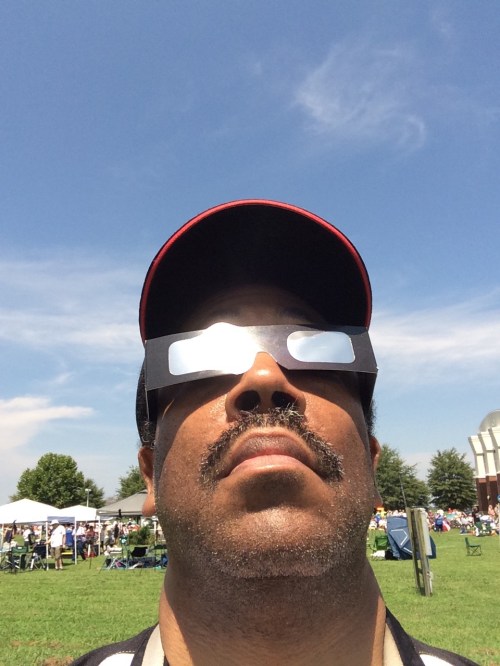
Figure 2. This is the experience I came for.
A truly unexpected surprise involved a conversation with another MIT Humanities alumnus, who asked me about Japan’s policies for energy generation. (No, I was unable to explain Japanese domestic political positions on this issue.) I was asked for career advice for an 11 year old who wants to be an astrophysicist. A particular major? Which subjects / courses to take? No, my answer, in a setting like this, is much easier – and yet, much more challenging:
“Don’t let anyone talk you out of curiosity and passion.”
As we drive back, just a census of the license plates points to what that means. Indiana, Kentucky, Tennessee, of course. Maryland, Michigan, Ohio, Pennsylvania? Check. But at the event, the census was much broader: California; Czech Republic; Hong Kong; Switzerland. What would drive someone to travel the world to experience totality in a small Midwestern town? I met someone at the hotel last night, who started planning his family trip over five years ago; he made his hotel reservation well before the hotel was finished construction. If those are not the expressions of people transforming their passion into experience, I don’t know what is.
What was it to be in the path of totality? The need for sunglasses dissipates; the air cools, and then the breeze picks up. A couple of planets, bright lights in the nighttime sky, appear in their courses. Within a few seconds of the alignment, one begins to notice a “360 degree sunset” of red and purple, combined with the downward illumination of the clouds in the distance. (We were extremely fortunate, that the sun was not obscured by clouds during the entire eclipse.) I will not even try to describe my internal experience of totality. I can only say that I feel it a tremendous gift to actually be able to experience it, in the context of my life of research and education and engagement.
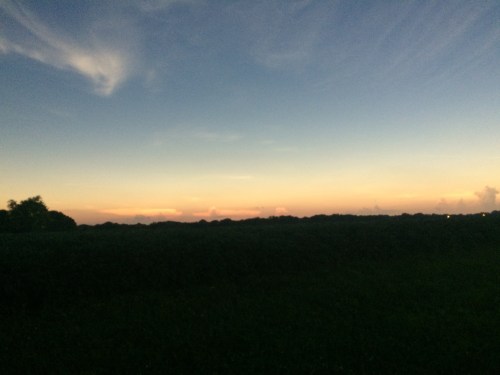
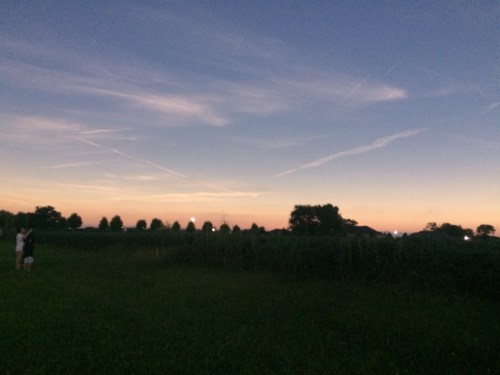
Figure 3. Being in the umbra: “sunset” everywhere
Tomorrow, I go to work again… back on campus, with lectures on defining and scoping systems for engineering solutions. New students, new project efforts, new experiences to consider and curiosity to pursue: what new paths are out there?
Back to September…
Not surprisingly, a lot of the Space Grant discussion highlighted the Eclipse event, and for good reason. It was a “Really Big Deal.” By several estimates, this was one of the most experienced digital events over this decade: the largest government and NASA digital event ever, and a total audience in the range of that for a Super Bowl… for a STEM activity. That is literally a national and international experience of space science in your life. The person who put Space Grant in the middle of this path was another Space Grant Director, Angela Des Jardins, a self-proclaimed introvert who became a primary face of the Great American Eclipse. The Space Grant meeting was really her moment, the culmination of five years of dreaming and doing, now done. I found my response to her moment enlightening as well. I could see how others demonstrated their appreciation, and their expression of being affected and influenced by her actions. I remember how she started on this event planning, never imagining what outcomes would result from a dream expressed and passion pursued. Do I really need my own eclipse? Well, one can make the point that this eclipse was not of Angela’s making, and by the time the film crews appeared, she was as much a product of the experience as a cause. There is nothing wrong with that, and even if the outcomes of my experience or presence is not always as tremendous or profound, there are outcomes that I do not see, and those outcomes can be important for any number of people. We all cross a number of paths, and I don’t always integrate the number of paths that I do traverse and tangent. These are great reminders.

 grouperlab
October 23, 2017
Expanding the Territory
Now that I have returned to Purdue, I am back to experiencing some of my past habits and activities as a faculty member. In my previous entry, “Crossing Paths,” I mentioned my trip to North Dakota for the Space Grant meeting; last week, the travel was to Austin, Texas for the Human Factors and Ergonomics Society (HFES) meeting. After being in Washington for a full year, it was both refreshing and curiously strange to be back at an academic conference. More than anything else, I was able to enjoy re-connecting with colleagues and collaborators and others in a community that I have been an active part for over 25 years, rather than the valuable (but disconcerting) experience of learning a new environment and new norms in an unfamiliar context.
A year away from something so immersive as one’s primary research community does permit a new experience and view upon one’s return. It is not just that my presentations took on a slightly different tone due to the experience of writing for diplomats; I was thinking about the presentations differently, colored by my growing understanding of what it is to speak on policy topics. I was very glad to see GROUPER alumnae and hear of their successes; I enjoyed watching the current students present well and receive appreciative comments from the audience. That was much more satisfying in many ways than actually being the one presenting all of the papers. It’s an interesting expansion of perception and shift in perspective on the territory (dare I say legacy?) of one’s career. Interestingly, I could also hear it differently this time, aided by the alternative experience of last year. Where has the influence gone, and how has it traveled from its headwaters? Does the river notice its impact on the stones as it flows?
I recognize that some of what I missed while in Washington was the regular opportunity to work with and mentor people whose personal and professional trajectories could be increased. What I could begin to notice in Austin was how much influence my past efforts have had on others, even when I didn’t realize previously that what I was doing would affect them in a lasting way. In retrospect, it’s not surprising, but at the time, I found myself at a loss for words when I was introduced to a promising student by someone who had already been positively influenced by their interactions with me. I wasn’t actively recruiting new students… but I would be pleased to have such exciting and passionate people to help explore new projects and possibilities.
Another area of recognition during the past two months since I returned from Washington was the change in context to describe the applications of our work in the lab. Yes, it’s easy to excite other space folks about the NASA research on Mars exploration analog projects; pilots often don’t need to be convinced about the value of our aviation weather information studies. But policy impacts? Can’t we just leave that to others? As I have learned, the answer is “no”. The connections won’t be evident to all, as we’ve already learned from the story of Cassandra and “postcards”. What is the broader context of connections, within and beyond the communities that already sense the value of what we do?
Perhaps I shouldn’t be surprised about this, but nonetheless, it has taken me a while to process this change in thinking due to my experience in Washington. My conversations while in Austin did not just cover the next steps for the HFES, but next steps for national science and technology policy. The research discussions were not just posed in the context of a single principal investigator grant to a directed funding agency call… but possibilities to address broader elements of engineering’s role in society. What justification would you provide to say that your research was worth funding to people who weren’t specialists in your area, or even in STEM research in general? (Oh. This is exactly what is being proposed in the U.S. Senate.)
I happen to like GROUPER’s statement of why we exist… however, I’m biased, and I already know what it means to talk about “human processes of information flow, knowledge sharing, and task coordination”. But what is that good for? A very similar question was asked by, and of, the National Academy of Engineering (now renamed as part of the National Academies of Science, Engineering and Medicine, or NASEM) to explain the role of engineering research and technology development to address 14 “global Grand Challenges” facing society in the 21st Century. Speakers at the Global Grand Challenges Summit (GGCS) in Washington in July asked members of the audience to think about how their work might address any of the Grand Challenges: in essence, a call to consider expanding one’s territory of impact. And when I brought that question to the lab, an interesting insight emerged.
GROUPER research addresses seven of the 14 Grand Challenges.
Five of these are pretty obvious: PERCH research on brain injury recovery and personalized medicine for chronic care directly touches on “Personalized Learning,” “Reverse-Engineer the Brain,” and “Advance Health Informatics”. CORAL and SHARK work on secure supply chains and network operations center teams hits on “Secure Cyberspace”. These projects, together with our STINGRAY work on spaceflight operations, provide examples of “Engineer the Tools of Scientific Discovery,” particularly discovery conducted by interdisciplinary teams of humans. In addition, there are two more areas that benefit by GROUPER’s ability to capitalize on connections. It’s not just the individualized brain trajectories and chronic care models, but the discussion of Systems Engineering to support improved information architectures for non-text references, that helps address the push to “Engineer Better Medicines.” Improved information architectures, improved network operations and event responses, and better cognitive framing for addressing uncertainty in event prediction and response all assist in the effort to “Restore and Improve Urban Infrastructure”.
That’s a very big territory. There’s more to do, not less. Who else wants to go explore and map such beautiful frontiers?
Share this: